IV. Structural Geology of Transpression
IV.1 Strike-Slip faults
The
plate boundary is perhaps the most obvious strike-slip feature in partitioned
zones. This fault is the largest strike-slip feature in the deformation zone
and directly caused by simple shear. Even in homogeneous zones small scale strike-slip
features are created, being Riedel Shears. These formations are not restricted
to just homogeneous areas as they also form in partitioned regions. Most commonly
forming in brittle zones, Riedel Shears are a pair of strike-slip faults that
form so that their acute bisector forms parallel to the direction of the maximum
compressive stress, illustrated in the transpression model in (Figure 7). Primarily
strike-slip, Riedel Shears do have associated with them a small component of
dip-slip. One fault will form at a low angle to the transpression zone with
synthetic displacement to the boundaries. The second fault is antithetic and
forms at a high angle.
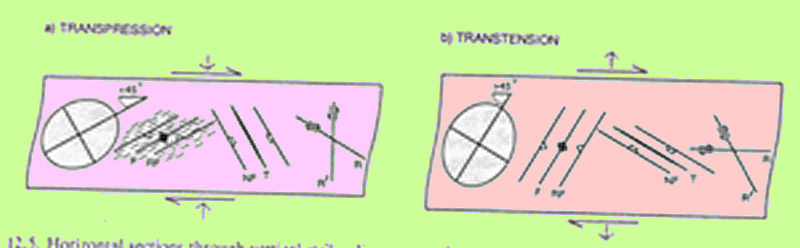
Figure 7: Shows the types of structures that form under Transpressional
and Transtensional Strains.
Reverse
faults are the product of any compressive and indeed transpressive zone that
undergoes faulting. Thrust faulting tends to strike perpendicular to the direction
of maximum compression, in the same direction as folds and foliation Figure
8.(b) (c) and (f).
In
many transpression settings we observe vertical thickening of the deformation
zone, this proving an ideal environment for thrust faulting to arise especially
when pure shear is large in magnitude and dominates. Normal faulting does occur
in net transpressive settings although only as a minor feature, but when they
form they strike at high angles to the zone.
Folds
tend to form sigmoidal patterns in rocks of a low metamorphic grade within heterogeneous
shear zones. Hinges form perpendicular to the Z-axis (vertical axis) in the
x-y plane, but can be subject to rotation in this plane by changing shear regimes.
The standard type of folding in deformation zones undergoing transpression is
the average fold system. In locations such as the San Andreas Transpression
System (Figure IV.3), this is well illustrated as we see a number of separate
fold axeisaligned sub-parallel
to the plate boundary.

Figure 9: Showing a schematised rendering of the San-Andreas
Wrench tectonic zone.
This
is a good representation of how deformation evolves due to pure shear compression.
In this deformation zone it is estimated that up to 95% of lateral simple shear
is taken up by the fault system, leaving the remaining component of pure shear
to dominate (H. Fossen et al, 1994).
Folds are created in conjunction
with Riedel Shears adopting a helicoidal geometry as the fractures twist to
meet the basement of the fault zone. Two separate types of Riedel Shears exist
in three dimensions (Figure 10 & 11). Firstly, concave upwards fractures
are called Tulip or Negative Flower structures and exist in transtensional environments.
In transpression, Palm Tree or Positive Flower structures are convex up. These
features have not only been modeled in sandboxes, but have been imaged using
seismic data.
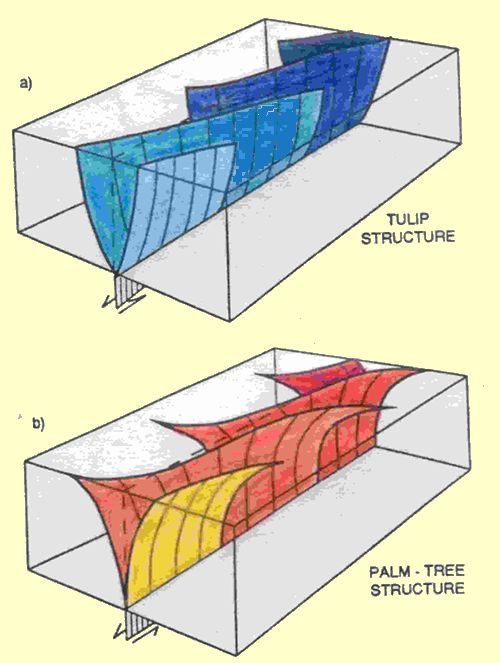
Figure 10: Diagram showing the form of Tulip Structures.

Figure
11: Diagram showing the form of Positive and Negative Flower Structures.
